Journal
Educational Toys for Kids: How to Choose Toys That Make Learning Fun
By Khilona junction · 29 Sept 2026
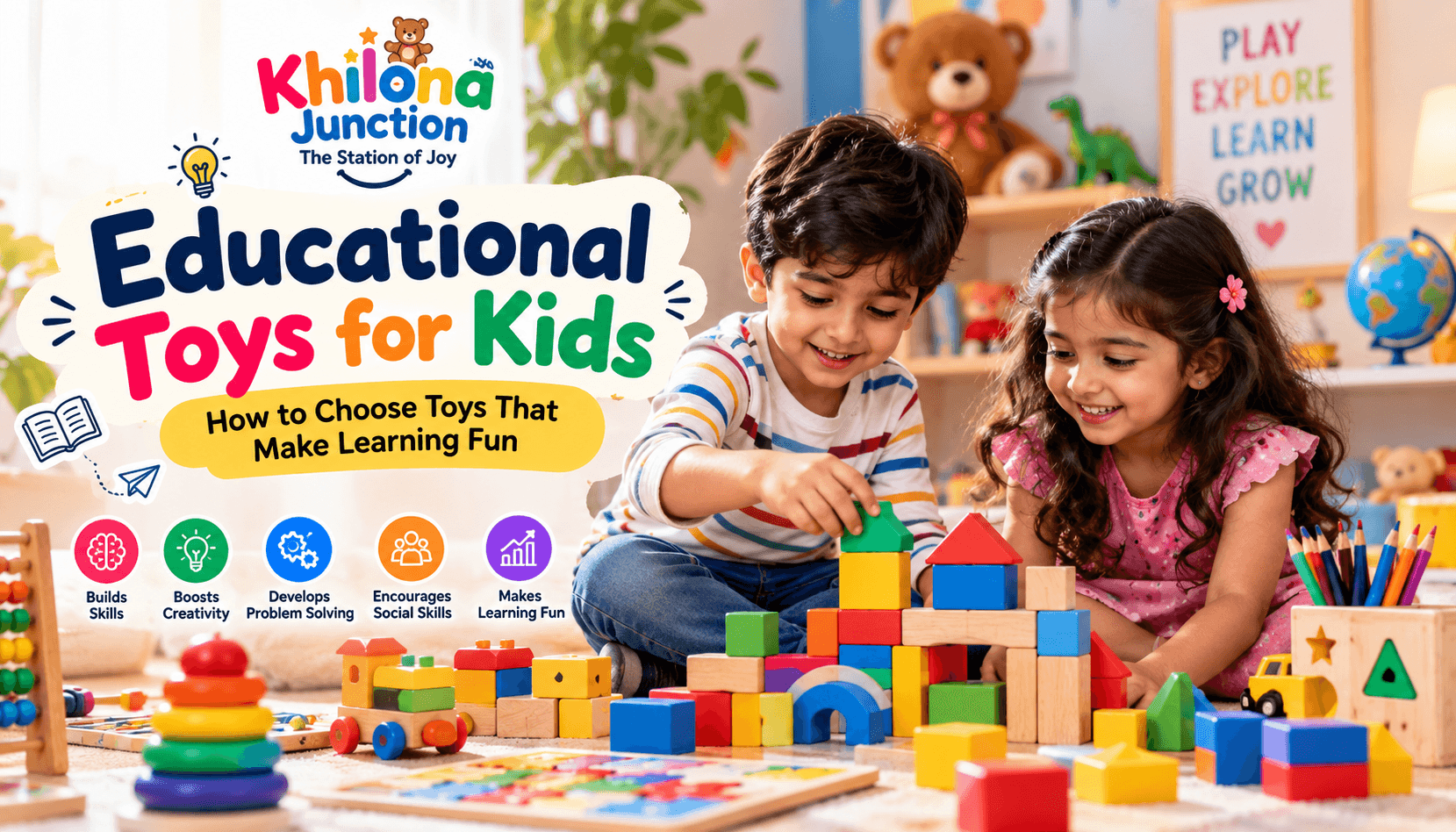
Educational Toys for Kids: How to Choose Toys That Make Learning Fun
Children learn naturally through curiosity, exploration, and play. A good toy is not just something that keeps a child busy—it can help them develop important skills while they are having fun.
This is where educational toys for kids can make a difference. From building blocks and puzzles to STEM kits, pretend-play sets, art supplies, and activity games, the right toy can encourage children to think, experiment, create, communicate, and solve problems.
But with thousands of toys available today, choosing the right one can be confusing for parents.
Should you choose a puzzle or a building set? Are STEM toys suitable only for older children? What toys are useful for toddlers? And how can you make sure a toy is both entertaining and appropriate for your child's age?
This guide will help you understand how to choose learning toys for kids based on age, interests, and developmental skills.
What Are Educational Toys?
Educational toys are toys designed to encourage learning and skill development through play.
Unlike traditional classroom learning, educational toys allow children to learn by doing. A child may develop problem-solving skills while completing a puzzle, understand basic mathematics while playing a counting game, or improve creativity while building something with blocks.
The best educational toys don't necessarily feel like studying.
They make learning feel like play.
Educational toys can help children develop skills such as:
Problem-solving
Logical thinking
Creativity
Fine motor skills
Hand-eye coordination
Memory
Concentration
Communication
Social skills
Early mathematical understanding
Language and vocabulary
Spatial awareness
The important thing is to choose toys that match the child's age, abilities, and interests.
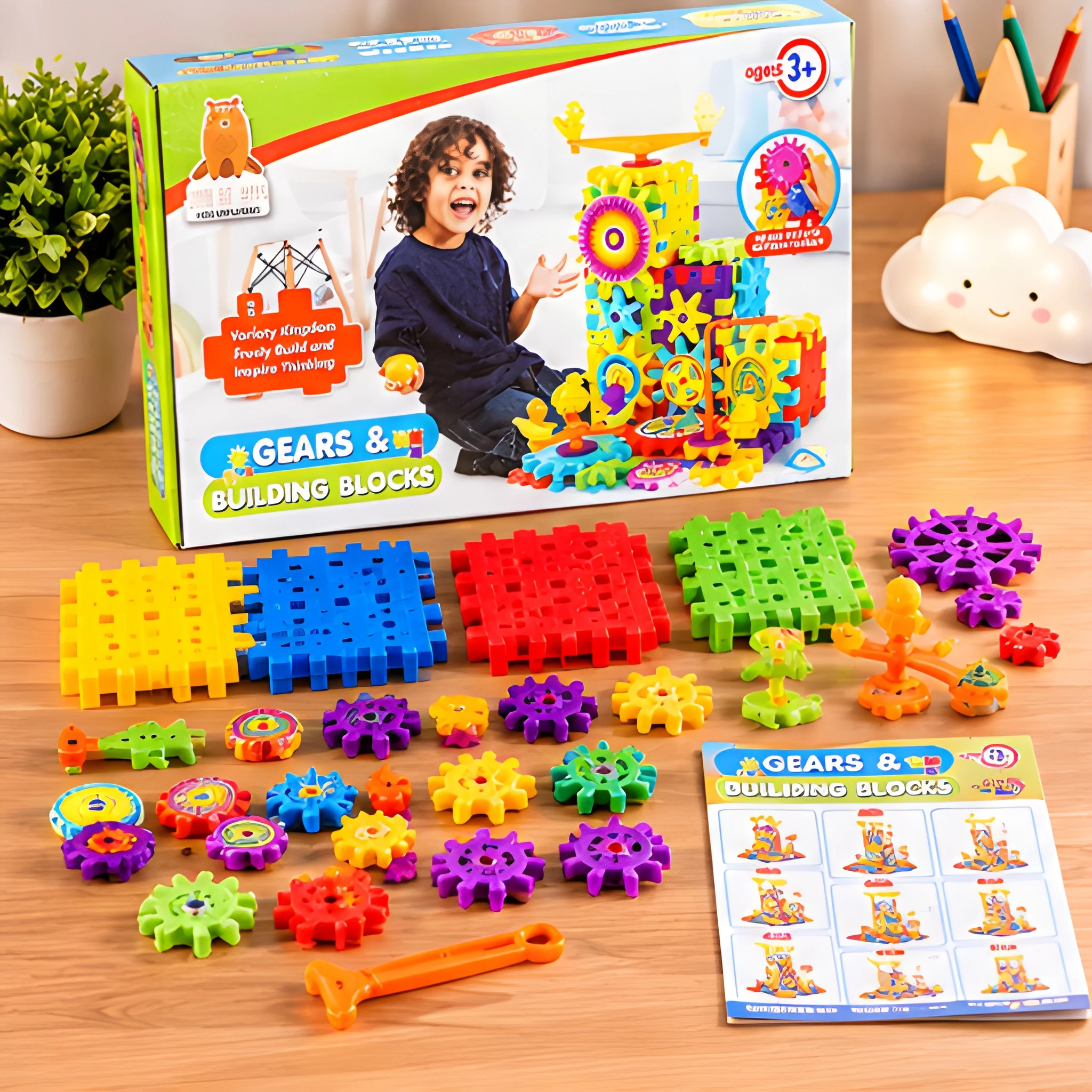
Why Are Educational Toys Important for Kids?
Children learn best when they are actively involved. Toys provide opportunities for children to experiment, make mistakes, try again, and discover solutions independently.
Here are some of the major benefits of educational toys.
1. Develops Problem-Solving Skills
Puzzles, construction sets, matching games, and strategy-based toys encourage children to find solutions.
For example, when a child tries to complete a puzzle, they have to:
Observe the pieces.
Identify patterns.
Try different combinations.
Recognize mistakes.
Adjust their approach.
Complete the problem.
These simple activities encourage logical thinking.
2. Encourages Creativity
Open-ended toys such as building blocks, magnetic tiles, drawing kits, clay, and craft sets allow children to create things using their own imagination.
There isn't always one correct answer.
A child can build a house, vehicle, tower, robot, or anything else they imagine.
This type of play encourages creativity and independent thinking.
3. Improves Fine Motor Skills
Fine motor skills involve the small muscles of the hands and fingers.
Activities such as:
Building blocks
Peg boards
Puzzles
Drawing
Colouring
Craft activities
Shape sorting
Connecting construction pieces
can encourage children to practise controlled hand movements.
These skills are useful for everyday activities such as writing, drawing, buttoning clothes, and using utensils.
4. Builds Concentration
Some toys encourage children to focus on one activity for an extended period.
Puzzles, construction sets, board games, memory games, and activity kits can encourage children to concentrate, follow instructions, and complete tasks.
However, the toy should match the child's age and ability.
If a toy is too difficult, the child may quickly lose interest.
5. Makes Learning More Enjoyable
Traditional learning can sometimes feel repetitive.
Educational toys provide another way to introduce concepts.
For example:
Numbers → counting toys and number games
Shapes → shape sorters and puzzles
Science → experiment kits
Building → construction sets
Language → word and vocabulary games
Creativity → art and craft kits
The goal is not to replace education but to make learning more interactive.
Types of Educational Toys for Kids
There are many categories of educational toys. The right choice depends on what skill you want to encourage.
1. Building and Construction Toys
Building toys are among the most versatile learning toys for children.
Blocks, construction sets, magnetic building toys, and similar products can encourage:
Creativity
Spatial reasoning
Planning
Problem-solving
Hand-eye coordination
Fine motor skills
Children can experiment with different structures and learn what happens when their designs succeed—or fall apart.
2. Puzzles
Puzzles are simple but powerful learning tools.
Age-appropriate puzzles can help children practise:
Pattern recognition
Visual reasoning
Memory
Concentration
Problem-solving
Hand-eye coordination
For younger children, large-piece puzzles with familiar objects or animals can be a good starting point.
Older children can gradually move towards more complex puzzles.
3. STEM Toys
STEM stands for:
Science, Technology, Engineering, and Mathematics.
STEM toys introduce children to these concepts through hands-on activities.
Examples include:
Building kits
Simple engineering sets
Science experiment kits
Coding toys
Robotics kits
Math games
Circuit-based learning kits
STEM toys can be particularly useful for children who enjoy experimenting and building things.
The key is choosing an age-appropriate product rather than buying the most advanced kit available.
4. Pretend-Play Toys
Educational play doesn't always involve numbers or science.
Pretend play is also an important part of childhood development.
Examples include:
Doctor sets
Kitchen sets
Tool sets
Shopkeeper sets
Doll houses
Role-play costumes
Toy vehicles
Playsets
Pretend play can encourage imagination, communication, storytelling, and social interaction.
A child playing “doctor” may practise conversations, create stories, and learn about different roles.
5. Art and Craft Toys
Art encourages children to express themselves creatively.
Drawing kits, colouring sets, craft kits, clay, painting activities, and similar toys can encourage:
Creativity
Fine motor skills
Imagination
Visual expression
Concentration
The objective doesn't need to be a perfect drawing.
The process of creating something is itself valuable.
6. Memory and Board Games
Memory games and age-appropriate board games can introduce children to concepts such as:
Taking turns
Following rules
Remembering information
Planning
Decision-making
Counting
Patience
These games can also provide opportunities for parents and children to play together.
Educational Toys by Age Group
One of the most important factors when choosing a toy is the child's age.
A toy that is perfect for a six-year-old may be frustrating or unsafe for a toddler.
Educational Toys for Babies and Toddlers
For very young children, focus on toys that encourage basic sensory and motor development.
Suitable categories may include:
Stacking toys
Shape sorters
Large-piece puzzles
Activity toys
Textured toys
Simple musical toys
Large building blocks
At this age, simple toys can provide plenty of opportunities for exploration.
Educational Toys for Preschoolers
Preschool children are developing language, imagination, coordination, and early mathematical concepts.
Good options can include:
Alphabet toys
Number games
Puzzles
Building blocks
Matching games
Art and craft sets
Pretend-play sets
Sorting and counting toys
Look for toys that allow children to explore rather than toys that require them to follow only one fixed process.
Educational Toys for Children Aged 5–8
Children in this age group can start exploring more structured challenges.
Examples include:
STEM kits
Construction sets
Strategy games
Science activity kits
Advanced puzzles
Art sets
Word games
Mathematics games
Beginner coding toys
At this stage, children can often handle toys that require multiple steps and longer concentration.
Educational Toys for Older Children
Older children may enjoy more complex challenges.
Options can include:
Robotics kits
Coding games
Advanced STEM kits
Engineering sets
Strategy board games
Complex construction sets
Science experiment kits
Creative DIY projects
The best toy will depend heavily on the child's interests.
A child who enjoys technology may prefer coding or robotics, while another child may enjoy art, construction, science, or strategy games.
How to Choose the Right Educational Toy
Buying an educational toy should not simply be about finding the product with the word “educational” on the packaging.
Consider these factors before buying.
1. Check the Recommended Age
Always check the manufacturer's recommended age range.
Age recommendations can help you understand whether the toy's complexity and potential hazards are appropriate for the intended child.
2. Consider the Child's Interests
A theoretically educational toy is not useful if the child doesn't want to play with it.
Think about what your child already enjoys.
Does your child like:
Building?
Drawing?
Animals?
Cars?
Science?
Stories?
Puzzles?
Music?
Pretend play?
Technology?
Start with their interests and then choose a toy that adds a learning element.
3. Look for Open-Ended Play
Open-ended toys can be used in multiple ways.
Building blocks are a good example.
One day a child might build a house. Another day they might create a bridge or a vehicle.
This flexibility can encourage imagination and independent play.
4. Don't Always Choose the Most Complicated Toy
More complicated does not automatically mean better.
A simple puzzle can provide a child with a meaningful challenge.
A very advanced STEM kit may end up sitting unused if it is beyond the child's current ability.
Choose the right level of challenge, not the highest level available.
5. Consider Durability
Children can be rough with toys.
Look for products made with materials appropriate for their intended use and age.
Durability is particularly important for construction toys, activity sets, and toys that are likely to be used frequently.
6. Check Safety Information
Toy safety should always come before educational value.
Parents should check:
Recommended age
Small parts warnings
Material information
Battery requirements
Sharp edges or points
Manufacturer instructions
Appropriate adult supervision requirements
For younger children, avoid toys containing small parts that could present a choking hazard.
Educational Toys vs Traditional Toys
Educational and traditional toys don't have to be completely separate categories.
A toy can be entertaining and educational at the same time.
For example:
Toy car:
Can encourage pretend play, storytelling, and basic understanding of movement.
Building blocks:
Can encourage creativity, spatial reasoning, and problem-solving.
Doll or action figure:
Can encourage storytelling and social role-play.
Board game:
Can encourage turn-taking, memory, counting, and strategy.
The most useful question isn't:
“Is this toy educational?”
Instead, ask:
“What can my child learn or practise while playing with this toy?”
How Parents Can Make Toy-Based Learning More Effective
You don't need to turn playtime into a classroom.
Instead, participate occasionally and ask simple questions.
For example, while playing with building blocks:
Instead of:
“Build this.”
Try:
“What do you think will happen if we make the tower taller?”
During a puzzle:
Instead of:
“Put this piece here.”
Try:
“Which piece do you think might fit here?”
These questions encourage children to think rather than simply copy instructions.
Should Parents Buy Many Educational Toys?
Not necessarily.
Having more toys does not automatically mean more learning.
A smaller collection of well-chosen toys can provide plenty of opportunities for play.
You can also rotate toys.
For example:
Week 1: Building toys
Week 2: Puzzles
Week 3: Art activities
Week 4: Pretend play
Rotating toys can make familiar products feel interesting again without constantly buying something new.
Educational Toys Can Grow With Your Child
Some toys have value beyond a single age range.
For example, a basic building set may initially be used simply for stacking.
Later, the same set can be used to build structures, create stories, explore balance, or follow construction challenges.
This is why versatile toys can be a practical addition to a child's toy collection.
Finding the Right Toy for Your Child
There is no single “best educational toy” for every child.
The right choice depends on:
Age
Developmental stage
Interests
Current abilities
Complexity
Safety requirements
Type of play
Budget
A good toy should provide enough challenge to encourage learning without making the child feel overwhelmed.
Most importantly, children should enjoy using it.
Explore Educational Toys at Khilona Junction
Looking for toys that combine fun, creativity, and learning?
Explore the educational and learning toy collection at Khilona Junction to discover options for different ages, interests, and play styles.
From puzzles and building toys to STEM activities, creative sets, and interactive games, choose toys that give children more opportunities to play, explore, create, and learn.
Make playtime more meaningful—one toy at a time.
[Explore Educational Toys →]
Frequently Asked Questions
What are the best educational toys for kids?
The right educational toy depends on the child's age and interests. Popular categories include puzzles, building sets, STEM toys, art and craft kits, memory games, educational activity sets, and pretend-play toys.
Are educational toys useful for toddlers?
Yes. Age-appropriate educational toys can encourage toddlers to practise skills such as coordination, sorting, matching, problem-solving, and fine motor control.
What are STEM toys?
STEM toys are toys and activity kits that introduce concepts related to science, technology, engineering, and mathematics through hands-on play.
How do I choose an educational toy for my child?
Start with the child's age, interests, abilities, and the type of skill you want to encourage. Always check the manufacturer's age recommendation and safety information.
Are expensive educational toys better?
Not necessarily. Price does not automatically determine educational value. A simple, age-appropriate puzzle or building set can provide meaningful learning opportunities.
Can normal toys be educational?
Yes. Many traditional toys can support learning. Building blocks, toy vehicles, dolls, board games, art materials, and pretend-play sets can all encourage different developmental skills.
How many educational toys does a child need?
There is no fixed number. A small collection of versatile toys can provide plenty of opportunities for learning and creative play. Rotating toys can also keep children interested.
Should parents play with children?
Parents do not need to supervise every moment of play, but playing together sometimes can create opportunities for conversation, questions, storytelling, and collaborative problem-solving.
Final Thoughts
The purpose of an educational toy isn't to make childhood feel like school.
It is to give children opportunities to explore, experiment, imagine, create, and solve problems while having fun.
When choosing toys, focus less on labels and more on the experience the toy provides.
Choose toys that match your child's age, interests, and abilities—and give them enough freedom to discover things for themselves.
Because sometimes, the best learning happens when children don't even realize they're learning.
Play. Explore. Learn. Grow.
Khilona Junction — The Station of Joy.